Farming our Future
Farming our Future
Solutions
Global
We need to find a way to continue growing crops quickly to provide food security for the growing population while minimizing the negative effects that agriculture has on the environment.
How can we do this?
A Change in Policy:
Many agricultural policies do not support farmers wanting to transition to sustainable farming. If governments across the world were to incentivize sustainable agriculture and build a support system for farmers through policy changes, we would see an increase in sustainable farming. This would set us on the right track to work towards climate neutrality on a global level. Some countries have begun to take initiative to create supportive policies and can serve as models for the rest of the world.
Costa Rica is a strong role model for supporting sustainable agriculture...
A New Future of Farming!
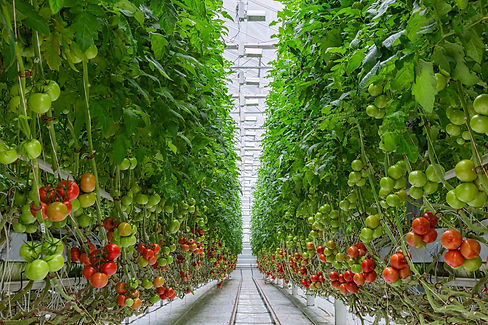
With the effects of climate change only intensifying, new farming strategies like controlled environment agriculture and vertical farming may be the solution.
Controlled environment agriculture involves farming in a closed environment where light, humidity, nutrients, temperature and other factors are tightly controlled for the best plant growth and production.
Vertical farming involves growing plants in shelving systems and/or growing up and down. Within vertical farming are growing strategies like hydroponics (growing in nutrient dense water), aeroponics (mist water onto the roots of the plants), and aquaponics (a closed looped system which involves a symbiotic relationship between plants and fish. Water is cycled through the plant, any by-products from the plant get washed into a fish tank where those by-products become nutrients for fish, fish then give the nutrients back to the plants through that same water).
By using these agricultural techniques, crops can be produced without the use chemical fertilizers and pesticides and can receive the most nutrients without outside factors limiting their growth. Controlled environment agriculture and vertical farming systems are more sustainable as they use less water and often recycle that water as well as do not take up large plots of land. Additionally, these systems can be made more sustainable by using renewable energy as well as repurposing and reusing old buildings to host the crops.
Freight to Plate, an organization based in the Chicago area, works to implement sustainable farming solutions in urban areas. They repurpose shipping containers into places of sustainable farming.

Local
Change can come from you.
Unfortunately, it is unrealistic to expect all large commercial farms to become sustainable, especially when there are few policy systems in place to support the transition. These commercial farms often choose to focus on profits over their environmental footprints.
Instead, as consumers, we can work to improve our local food systems by supporting sustainable farms near us!
Purchasing your food from local, sustainable providers at farmers markets, grocery stores, farm-to-table restaurants will promote this type of farming. Not only that, the food that is produced sustainably is more nutrient-dense and free of the chemicals that harm your body. You are also limiting your carbon footprint when you buy local as your food is more fresh, not having to undergo lengthy transportation just to get to your shelf.
As consumers, we have the power to influence the market through consumer demand. Rather than there being a trickle-down effect from the big farms, the small, sustainable farms can pressure the big farms to change their ways.
We just have to make the choice to protect our Earth through making the simple change of buying sustainably and locally.